


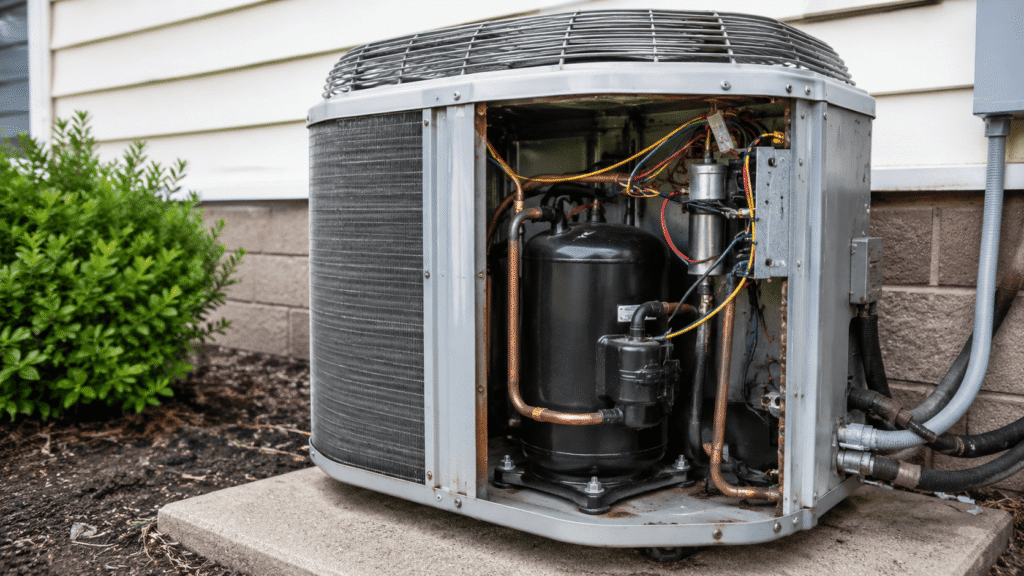
When summer temperatures and humidity rise across Knightdale and the greater Raleigh area, a dependable air conditioner becomes essential. Unfortunately, peak cooling season is also when older or struggling systems are most likely to break down.
If your AC has started making unusual noises, running constantly, producing uneven temperatures, or requiring repeated service, you may be facing an important decision: Is it better to repair the air conditioner again, or replace it before the next stretch of extreme heat?
There is no single answer that applies to every home. The right choice depends on the age and condition of the equipment, the expected repair cost, the frequency of previous problems, energy efficiency, comfort, and how long you plan to remain in the home.
For homeowners in Knightdale, Raleigh, Wake Forest, Garner, Apex, Durham, and surrounding Triangle communities, making this decision before the hottest part of summer can help prevent an unexpected breakdown and provide more time to compare available options. Reliable Heating & Air provides both professional air conditioning repair and AC installation and replacement, helping homeowners make an informed decision based on the condition of their current system.
Should You Repair or Replace Your Air Conditioner?
Repairing your AC may make sense when the system is relatively young, the problem is minor, and the unit has otherwise been dependable. Replacement may be the better long-term decision when the system is older, repairs are becoming more frequent, energy bills are increasing, or the AC can no longer keep your home comfortable.
ENERGY STAR recommends considering replacement when an air conditioner or heat pump is more than 10 years old, especially if it requires frequent repairs or no longer performs efficiently. ENERGY STAR also notes that replacing outdated equipment with a properly installed, high-efficiency system can reduce heating and cooling costs.
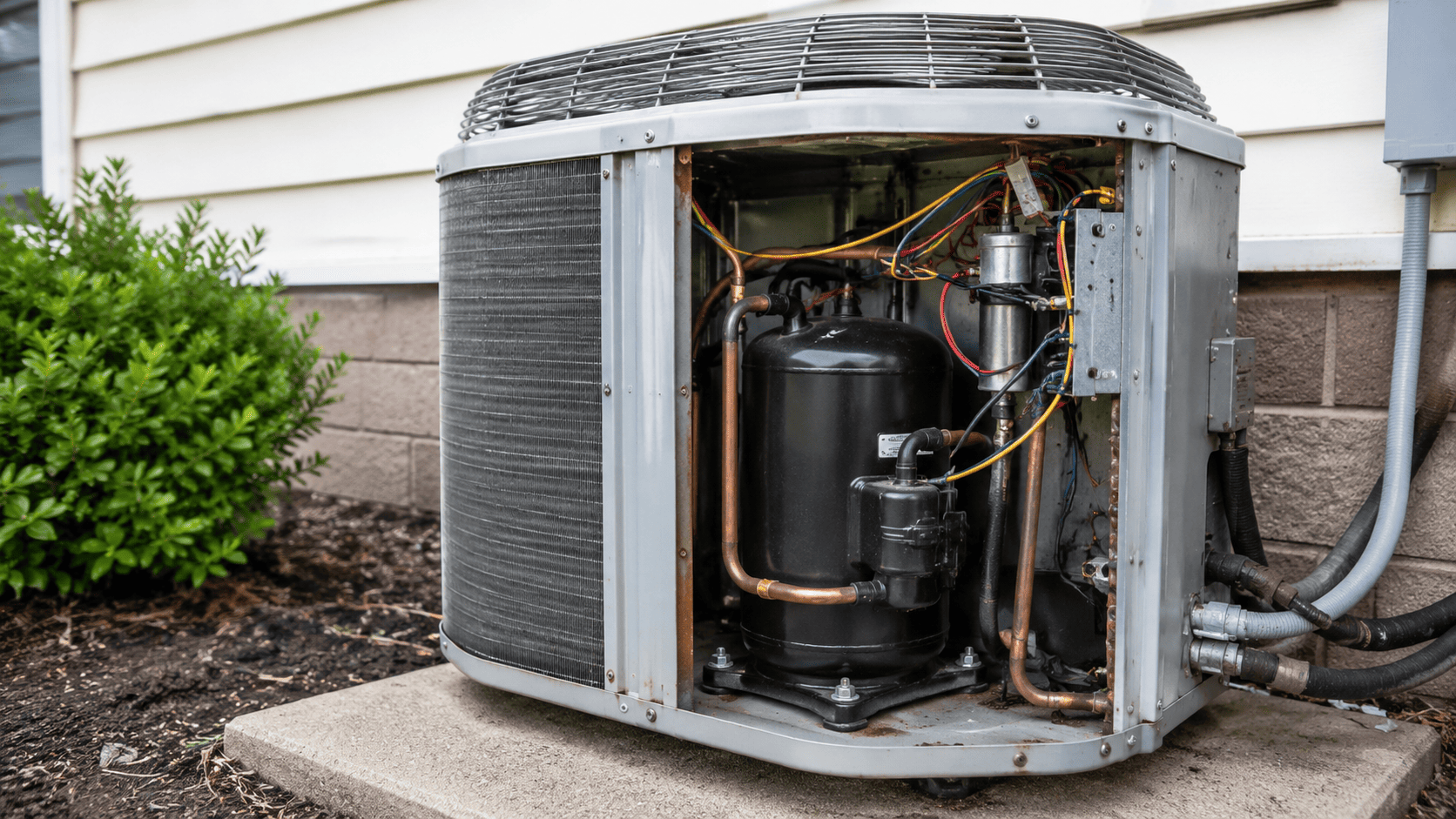
Age is important, but it should not be the only deciding factor. A professional HVAC technician should also evaluate the compressor, coils, refrigerant system, blower motor, electrical components, thermostat, ductwork, and overall cooling performance.
Consider the Age of Your Air Conditioner
Air conditioners do not automatically stop working once they reach a specific age. However, the likelihood of component failures and declining efficiency generally increases as equipment gets older.
Reliable Heating & Air notes that air conditioning systems commonly last approximately 10 to 15 years. Systems approaching or exceeding that range may begin experiencing inconsistent temperatures, higher utility costs, frequent service needs, or difficulty keeping up with North Carolina’s hottest weather.
A seven-year-old AC with a failed capacitor may be a strong candidate for repair. A 14-year-old system that needs a new compressor, has a leaking coil, and has already required several recent repairs may be a better candidate for replacement.
Maintenance history also matters. A well-maintained older system may still have useful life remaining, while a neglected unit may experience premature failures. Homeowners should consider whether the system has received regular maintenance, how often it has needed repairs, whether major components are still under warranty, and whether it can maintain the desired temperature on hot afternoons.
Age combined with poor performance and expensive repairs often creates a stronger financial case for replacement.
Compare the Repair Cost With the System’s Remaining Value
The cost of the current repair is one of the most important factors in deciding whether to repair or replace an air conditioner.
A minor electrical repair, clogged condensate drain, thermostat replacement, or airflow adjustment may be worthwhile even on an older system. Major repairs involving a compressor, evaporator coil, condenser coil, or refrigerant leak require a more careful comparison.
Some homeowners use a calculation commonly called the “$5,000 rule.” This involves multiplying the age of the equipment by the estimated repair cost. If the result is considerably higher than $5,000, replacement may deserve stronger consideration.
For example, a 12-year-old air conditioner requiring a $600 repair produces a total of $7,200 when the age and repair cost are multiplied. This does not automatically mean the system should be replaced. It is only a rough decision-making tool. The system’s efficiency, overall condition, warranty coverage, repair history, and expected remaining life are more important than any single formula.
A reputable HVAC contractor should explain both repair and replacement options whenever either choice is reasonable. Reliable Heating & Air provides detailed estimates and recommendations based on the homeowner’s comfort, budget, and long-term needs.
Look at How Often the AC Has Needed Repairs
One repair does not necessarily mean an air conditioner is failing. Repeated breakdowns, however, can indicate that multiple components are beginning to reach the end of their useful lives.
Review the system’s repair history over the past two or three cooling seasons. If the AC has needed service every summer or several times during the same season, the cumulative repair costs may be approaching the amount that could be invested in a more dependable replacement.
Frequent repairs also come with indirect costs. Your family may have to wait in an uncomfortable home, adjust work schedules, pay emergency service charges, or deal with repeated uncertainty about when the system will fail again.
Replacing an AC before it stops working completely gives homeowners more control over timing, equipment selection, financing, and installation. Waiting until the system fails on a 95-degree afternoon can make the decision feel much more urgent.
Evaluate How Well the AC Cools Your Home
An air conditioner does not have to stop working completely before replacement becomes worth considering.
A declining system may continue turning on and producing some cool air but still struggle to maintain comfortable conditions. The AC may run nearly continuously, the upstairs may remain warmer than the rest of the home, or certain rooms may receive noticeably weaker airflow.
Inconsistent temperatures, frequent cycling, rising energy bills, unusual noises, excess humidity, and reduced cooling performance are all signs that the system needs professional attention.
These issues do not always mean the AC must be replaced. A dirty filter, failing capacitor, dirty coil, refrigerant leak, thermostat problem, damaged blower motor, leaking ductwork, poor insulation, or blocked vent could also be responsible.
A complete diagnostic evaluation helps determine whether the issue is limited to a repairable component or reflects broader equipment decline.
Pay Attention to Rising Summer Energy Bills
Older air conditioners can become less efficient as components wear and airflow problems develop. Dirty coils, aging motors, low refrigerant, and compressor wear may cause the system to run longer while producing less cooling.
Compare your recent summer electricity bills with previous years while accounting for changes in weather, utility rates, thermostat settings, and household use. A steady increase in cooling costs without an obvious explanation may indicate that the AC is losing efficiency.
Newer systems may offer improved performance through variable-speed technology, advanced compressors, more efficient coil designs, and more precise temperature control. However, efficiency ratings alone do not guarantee lower energy use. Proper sizing, duct condition, refrigerant charging, airflow, and installation quality all play a major role in real-world performance.
Consider the System’s SEER2 Rating
SEER2, or Seasonal Energy Efficiency Ratio 2, measures the seasonal cooling efficiency of an air conditioner or heat pump under current testing standards. A higher SEER2 rating generally means the system can produce more cooling while using less electricity.
An older air conditioner may have a much lower efficiency rating than equipment available today. Replacing it with a more efficient system could reduce energy use during Knightdale’s long, humid summers.
That does not mean every homeowner needs the highest available efficiency rating. The best option depends on the home, budget, comfort goals, expected length of ownership, electricity costs, ductwork condition, and available incentives.
A knowledgeable contractor can compare equipment options and estimated operating costs instead of recommending a system based only on its efficiency rating.
Make Sure the AC Is Properly Sized
Air conditioner size refers to cooling capacity rather than the physical dimensions of the equipment. A properly sized system should be selected according to the home’s cooling load.
An undersized system may run constantly and still fail to cool the home. An oversized system can create a different problem by cooling the area near the thermostat too quickly and shutting down before it adequately removes humidity or distributes air evenly.
Proper sizing should account for square footage, insulation, ceiling height, window placement, sun exposure, air leakage, occupancy, and the local climate. Simply replacing an older unit with another system of the same capacity may repeat existing comfort problems.
A professional load calculation should be completed before new equipment is selected. This helps ensure the replacement system can maintain consistent temperatures without excessive cycling or wasted energy.
Factor in Knightdale’s Summer Humidity
Cooling a home in Knightdale involves more than lowering the temperature. The air conditioner must also remove moisture from the indoor air.
An aging, oversized, poorly maintained, or improperly operating system may leave the home feeling sticky even when the thermostat displays a comfortable number. Excess humidity can also contribute to musty odors, window condensation, and indoor air quality concerns.
A properly selected replacement system may offer better moisture control through longer, steadier cooling cycles or variable-speed operation. Before replacing the equipment, however, the contractor should confirm that humidity issues are not being caused by leaking ducts, poor air sealing, incorrect blower settings, or another repairable condition.
Consider the Type of Refrigerant the AC Uses
Older air conditioners may use R-22 refrigerant, which is no longer manufactured or imported into the United States for use in existing systems. Reclaimed or previously produced R-22 may still be available, but its cost and limited supply can make major refrigerant-related repairs less attractive.
An R-22 system does not need to be replaced simply because of the refrigerant it uses. If the unit remains sealed, reliable, and efficient, it may continue operating.
The decision becomes more complicated when an older R-22 system develops a substantial leak or needs a major coil or compressor repair. Investing heavily in an aging system may not be worthwhile if another major failure is likely in the near future.
A technician should identify the refrigerant type, determine why refrigerant was lost, and explain the long-term repair implications before simply adding more.
Review the Warranty Coverage
Warranty coverage can have a major effect on the repair-or-replace decision.
Manufacturer warranties may cover certain major components for a defined period, provided the system was properly registered and the warranty requirements were met. Labor, refrigerant, diagnostic fees, and related materials may not be included.
A major repair covered primarily by warranty may be worthwhile, especially if the system is still relatively young. The same repair without warranty coverage on an older, less efficient unit may make replacement the more practical choice.
Homeowners should ask whether the failed component is covered, whether labor coverage applies, and whether the repair itself will receive any additional warranty protection.
Think About How Long You Plan to Stay in the Home
Your plans for the property should also influence the decision.
If you expect to move soon, a reasonable repair may keep the AC operating without requiring a major investment. On the other hand, replacing an obviously outdated or unreliable system could make the home more attractive to potential buyers and reduce concerns during the home inspection.
Homeowners who plan to stay for several more years may receive more value from a replacement through improved comfort, fewer repair concerns, better energy efficiency, quieter operation, modern controls, and new warranty coverage.
The best choice depends on how much useful life the repair is expected to provide and whether that timeline aligns with your plans for the home.
When AC Repair Is Usually the Better Choice
Repair is often the better option when the system is less than 10 years old, the problem is relatively minor, and the AC has been dependable up to this point. It may also make sense when energy bills remain consistent, the home is comfortable when the system is operating properly, and major components remain covered by warranty.
Capacitors, contactors, thermostats, clogged condensate drains, certain fan motors, electrical connections, and minor airflow problems can often be repaired without replacing the entire system.
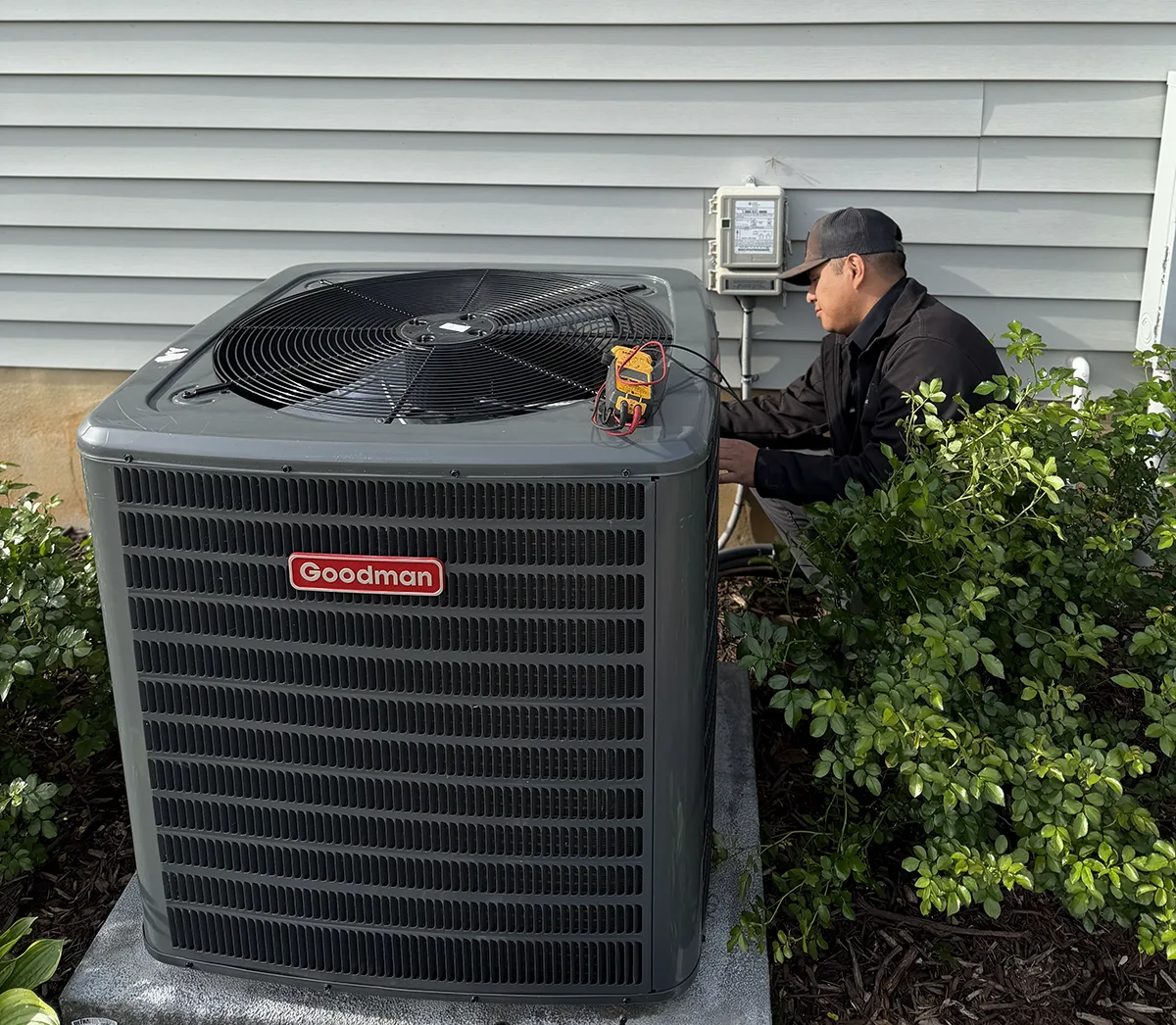
Scheduling service quickly may prevent a smaller issue from placing additional strain on the compressor or other expensive components. Reliable Heating & Air provides professional AC repair in Knightdale and the surrounding Raleigh area for systems producing warm air, unusual noises, frequent cycling, leaks, and other cooling problems.
When AC Replacement Is Usually the Better Choice
Replacement deserves stronger consideration when an air conditioner is between 10 and 15 years old, requires an expensive repair, or has needed service repeatedly over the past few summers.
A new system may also be more practical when the existing unit cannot maintain comfortable temperatures, indoor humidity remains high, electricity bills continue to increase, or the equipment is improperly sized for the home.
Homeowners may also choose replacement to gain better efficiency, quieter operation, improved humidity control, updated thermostat compatibility, or more dependable warranty protection.
Reliable Heating & Air offers AC installation and replacement services throughout Knightdale, Raleigh, Wake Forest, Garner, Apex, Cary, Durham, Clayton, Wendell, and nearby communities. The company evaluates the home’s cooling needs before recommending properly sized equipment.
Why Make the Decision Before Peak Summer Heat?
Waiting until the AC completely fails may allow homeowners to get the maximum possible life from the system, but it also carries risks.
During the hottest stretches of summer, HVAC companies often receive more emergency calls. Appointment schedules can fill quickly, equipment availability may be more limited, and families may spend several uncomfortable days without reliable cooling.
Making the decision earlier provides more time to compare repair and replacement estimates, review financing, research equipment options, and schedule installation at a more convenient time. It also reduces the pressure to make a major purchasing decision during an emergency.
Can AC Maintenance Help Delay Replacement?
Routine maintenance cannot make an aging air conditioner last forever, but it can help prevent avoidable breakdowns and premature failure.
Professional AC maintenance typically includes inspecting the equipment, cleaning key components, testing electrical connections, checking refrigerant performance, evaluating airflow, and confirming that the condensate drainage system is operating correctly.
Reliable Heating & Air also offers an HVAC maintenance plan designed to support reliable performance and identify developing issues before they lead to a breakdown.
Maintenance may help a healthy system continue running efficiently. However, it cannot correct a failed compressor, severely damaged coil, improper system sizing, or widespread mechanical deterioration.
What Should You Expect During an AC Replacement Estimate?
A replacement estimate should involve more than looking at the model number on the current equipment.
The contractor should evaluate the home’s size, layout, insulation, windows, sun exposure, air leakage, ductwork, airflow, electrical requirements, condensate drainage, humidity levels, and current comfort concerns.
Homeowners should receive clear options explaining differences in efficiency, compressor technology, warranties, expected comfort, and long-term operating costs. The estimate should also explain whether permits, removal of the old equipment, disposal, thermostat installation, electrical modifications, drain work, startup testing, and warranty registration are included.
Comparing complete proposals is more valuable than comparing the equipment price alone.
Frequently Asked Questions About Repairing or Replacing an AC
Should I replace a 10-year-old air conditioner?
Not automatically. A well-maintained 10-year-old system with a minor problem may still provide several years of dependable service. Replacement becomes more reasonable when age is combined with frequent repairs, poor efficiency, major component failure, or inadequate comfort.
Is it worth repairing a 15-year-old AC?
It depends on the repair. A small repair may be worthwhile, particularly if the system has otherwise been reliable. A major compressor, coil, or refrigerant repair on a 15-year-old unit may provide less value than replacing the equipment.
Will a new air conditioner lower my electric bill?
A properly sized and installed high-efficiency system may reduce cooling-related energy use, especially when replacing older equipment. Actual savings depend on the weather, thermostat settings, utility rates, ductwork, insulation, and household habits.
Should I replace my AC before it completely stops working?
Replacing a system before total failure can be beneficial when it is clearly declining. It allows more time to compare equipment, review financing, and schedule the installation before peak demand.
How long does AC replacement take?
Many standard residential replacements can be completed within a day. More complex installations may take longer when ductwork, electrical systems, drainage, permits, or equipment locations require additional work.
Should I repair or replace an AC with a refrigerant leak?
A small, repairable leak in a newer system may be worth correcting. Replacement may be more practical when the system is older, uses R-22, has a leaking coil, or requires an expensive repair with limited expected remaining life.
Get an Honest AC Assessment in Knightdale
Choosing between AC repair and replacement is ultimately a financial, practical, and comfort-based decision. A minor repair may keep a younger system operating effectively for years. An expensive repair on an aging, inefficient, or unreliable unit may only delay an inevitable replacement.
Reliable Heating & Air serves homeowners throughout Knightdale, Raleigh, Wake Forest, Garner, Apex, Cary, Durham, Clayton, Wendell, and other Triangle communities. The company provides AC repair, replacement, preventive maintenance, heat pump services, ductless systems, indoor air quality solutions, and emergency HVAC assistance.
Before peak summer heat arrives, schedule a professional evaluation so you can understand the condition of your current system and compare your options without the pressure of an emergency breakdown.
Contact Reliable Heating & Air to schedule AC service or request an estimate for a new cooling system.